
Bidirectional Ceramic Filter
Why Choose Us
High Quality
Our products are manufactured or executed to very high standards, using the finest materials and manufacturing processes.
24H Online Service
We try and respond to all concerns within 24 hours and our teams are always at your disposal in case of any emergencies.
Professional Team
Our professional team collaborate and communicate effectively with one another, and are committed to delivering high-quality results. They are capable of handling complex challenges and projects that require their specialized expertise and experience.
Rich Experience
Dedicated to strict quality control and attentive customer service, our experienced staff is always available to discuss your requirements and ensure complete customer satisfaction.
What is Bidirectional Ceramic Filter
Bidirectional filter is a device that can play a filtering role in both forward and reverse flow conditions. In refrigeration, heating circulation systems and other fluid handling processes that require bi-directional flow, a bi-directional filter ensures that contaminants are effectively removed regardless of the direction of fluid flow, and reduces contamination backflow in the system that may result from a change in direction. Therefore, the two-way ceramic filter may refer to a kind of filtration equipment that not only has the characteristics of ceramic filters, but also can work stably in both positive and negative directions, and is suitable for those application scenarios that require frequent changes in the direction of the fluid or to ensure continuous filtration effect under the conditions of bi-directional flow.
-
![240㎡ Filter Area No Noise Ceramic Filter]()
240㎡ Filter Area No Noise Ceramic Filter
-
![3㎡ Environmental Ceramic Filter]()
3㎡ Environmental Ceramic Filter
-
![5㎡ Unbidirectional Distribution Valve Pump Ceramic Filter]()
5㎡ Unbidirectional Distribution Valve Pump Ceramic Filter
-
![2㎡ Filter Area Automatic Ceramic Filter]()
2㎡ Filter Area Automatic Ceramic Filter


Advantages of Bidirectional Ceramic Filters
High-efficiency filtration
Through its microporous structure, the two-way ceramic filter can efficiently filter various impurities and microorganisms to obtain purer water quality.
Convenient cleaning
During the use of two-way ceramic filter, it can be cleaned manually or by using the backwash system, which is convenient for cleaning and can effectively extend its service life.
Strong durability
Ceramic material has high hardness and pressure resistance, so it has a long service life and is not easily damaged.
Relatively low price
The price of bidirectional ceramic filter is relatively lower than some other filter materials.
Bidirectional Ceramic Filter Working Principle
Filter membrane formation
The working principle of two-way ceramic filter is to filter impurities and particles in liquid or gas layer by layer by forming a layer of filtering membrane that can block impurities. Therefore, the formation of the filter membrane is an important part of the two-way ceramic filter. Its quality and performance determine the efficiency and service life of the whole filter.
Filtration mechanism
Bidirectional ceramic filter stops harmful substances through surface retention, inertial impact, electronic coupling and other ways to ensure the purity and quality of the product. Specifically, there are the following filtration mechanisms:
Surface retention: A layer of filter membrane can be formed on the surface of the filter membrane to block impurities, when harmful substances pass through the filter membrane, they are easily stuck on the surface, so as to achieve the purpose of filtration.
Inertial impact: When the fluid enters the two-way ceramic filter, due to the effect of inertia, the particles in which it is difficult to maintain a uniform distribution in the fluid. At this time, the particles will collide with the fibers or particles, which will fall to the surface of the filter membrane or a layer of matting at the bottom.
Electronic coupling: Two-way ceramic filter can even use the principle of electronic coupling to intercept harmful substances. Some filters have a certain charge on the surface of the filter membrane, and these charges act on the sub-micron harmful substances to form an electrostatic field, thus forcing these substances to coalesce on the filter membrane and eventually be rejected.
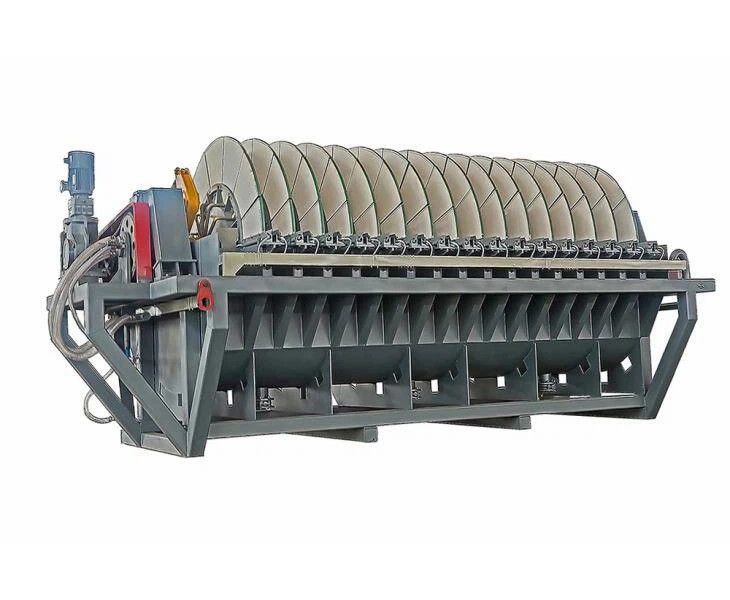
Bidirectional ceramic filter is a kind of fine filter, which is made of porous ceramic sieve, and its pore size is generally between 0.2~50 microns. Bidirectional ceramic filter has the following roles:
Separation of particles: The main function of two-way ceramic filter is to separate solid impurities and particles in liquid or gaseous state. In petroleum, chemical, electronics, aviation and other fields, these impurities and particles will affect the production process and product quality, so it is necessary to use two-way ceramic filter for filtration and separation.
Preventing clogging: Bidirectional ceramic filters have excellent pressure resistance, which can effectively prevent clogging and improve filtration efficiency when in use. The service life of two-way ceramic filter is relatively long, which can save costs.
Improvement of production: Bidirectional ceramic filter can improve production efficiency and output, and at the same time, it can ensure the quality and stability of products.
Filtration characteristics
The most important of the filtration characteristics is the dust collection efficiency mentioned above, followed by the filtration capacity and the clogging problem of the air holes.
Clogging
The solids collected by the ceramic filter accumulate outside or inside the filter (vessel) layer, clogging the pores of the filter, and the filtration capacity decreases. This clogging state can be manifested in several forms, such as the collection of solids on the surface; solids into the inner layer of the filter; and the accumulation of solids on the surface to form a rough surface layer (as if it were a filtration layer), in these cases, although the filtration capacity is gradually declining, the degree of decline is different.
Strength
Since the ceramic filter itself is subjected to internal pressure, external pressure, compression, tension and other forces, strength is one of the important characteristics. In addition, when used at high temperatures (700 to 1,000°C), it is a very important characteristic that the heat applied to the filter does not cause softening or a decrease in strength. Although the strength is affected by many factors such as aggregate quality, aggregate particle size, binder quality and mixing ratio, it is mainly related to the strength of the aggregate and the strength of the binder layer. For example, the order of strength of various materials usually used as aggregate (aggregate) particles is:
SiC, Al2O3 > mullite > ceramic particles > silica sand, carbon particles
Although the strength of the bonding layer depends mainly on the binder and firing conditions (temperature and atmosphere), it is also important to adjust the coefficients of thermal expansion of the binder and the aggregate to ensure that the bond between the binder and the aggregate is strong (i.e., the coefficient of thermal expansion and the bond are also important factors affecting the strength of the bonding layer).
Corrosion resistance
Ceramic filters usually have extremely good acid resistance and remain stable at high temperatures for all acids other than fluorine acids. Acid resistance is affected by factors such as binder fit, firing conditions, and aggregate quality. In order to obtain filters with excellent alkali resistance and vapor resistance, specially formulated binders are required. Carbon filters have excellent alkali resistance.
Contamination resistance
In the case of precision filtration (as a special case), in order to prevent contamination of liquids, trace amounts of dissolved matter are not allowed. When ceramic filters are used, there is usually no dissolved matter, and they are qualified when tested according to the Food Sanitation Law, so they can be used in the poultry industry.
Thermal shock resistance
Although ceramic filters can be used in high-temperature areas that cannot be reached by other porous bodies, they are preferably used in high-temperature areas of less than 1,000°C when filtering combustion exhaust gases, molten metals, and at nozzles where gases are blown into high-temperature furnaces. In order to adapt to a higher temperature region, a filter that uses very little binder and in which the aggregates are composed of each other in a self-combined manner is considered.
In the high-temperature region of 700 to 1000°C, silicon carbide ceramic filters with excellent thermal shock resistance show good results. Next is the alumina ceramic filter. Figure 2 below shows the variation in high-temperature strength of filters using a specially formulated ceramic binder with silicon carbide as the aggregate (collector) material.
• Cleanable self-sterilizing ceramic filters can reduce filter replacement costs.
• Designed to comply with the most stringent potable water standards.
• Ceramic elements remove 100% of Cryptosporidium, Giardia lamblia cysts and bacteria.
• Removes 99.9999% of suspended solids.
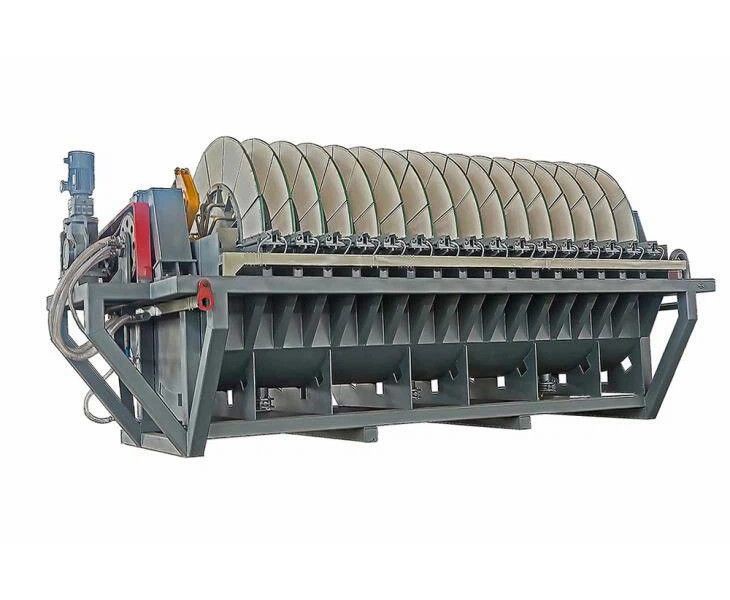
How Does a Two-Way Ceramic Filter Work?
Ceramic filters work via mechanical filtration, where the filter acts like a sieve. As water flows through the ceramic filter surface, any particle that is larger than the pore size of the ceramic will be blocked.
Because ceramic pores are so fine, ceramic water filters can reduce or eliminate microscopic contaminants including sediment, protozoa, microbial cysts (giardia, cryptosporidium etc), and bacteria. However, ceramic filtration on its own is not effective against viruses.
Many ceramic filters will incorporate silver to destroy or incapacitate bacteria. The presence of silver can also prevent the growth of algae and mould in the filter itself.
It’s important to note that ceramic filters will not remove chemical contaminants. This is why manufacturers sometimes add a centre core of granular activated carbon (GAC) or a carbon block.
This makes the filter capable of reducing a range of organic and synthetic chemical contaminants including chlorine, chloramines, trihalomethanes, volatile organic compounds, PFAS, and polychlorinated biphenyls (PCBs).
Some ceramic water filters have proprietary blends of materials within their inner core. The Aquametix® and CeraMetix® filters, for example, use a special blend of carbon and minerals to achieve fluoride reduction (in addition to chlorine and chemical removal).
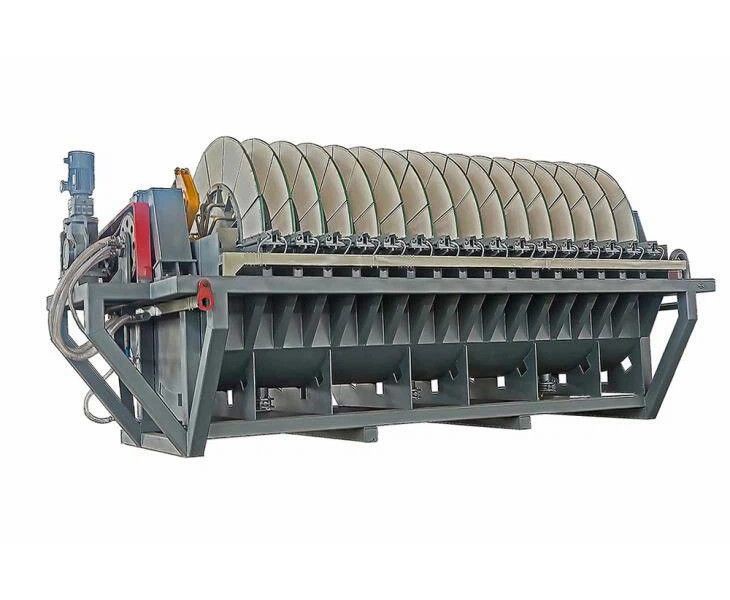
This depends on several things, including the quantity of sediment in your water and the amount of water passing through the filter. You should clean your filter every two to three months if your water is reasonably clean.
If you’re in an area with a lot of sediment and you’re using a canister system, you should put a sediment filter in before putting in your ceramic filter. This will keep your filter from clogging up too rapidly. If cleaning your filter sounds too labor intensive, consider getting a ceramic filter that uses replacement filters.
Difference Between Unidirectional Ceramic Filter and Bidirectional Ceramic Filter
Different functions
Unidirectional ceramic filters only have the function of verifying input data, and cannot filter and encrypt output data. Bidirectional ceramic filters have the functions of filtering and encrypting both input and output data.
Different processing timing
Unidirectional ceramic filter data verification of the input request processing time is before the request reaches the server, while the bidirectional ceramic filter on the input request and output response at the same time for data filtering and encryption.
Different security
Since the one-way ceramic filter can not filter and encrypt the output data, so the security is relatively low, vulnerable to XSS, CSRF and other attacks. The two-way ceramic filter can encrypt the output data to prevent hacking.
What is a Bidirectional Ceramic Filter made of?
In most cases, ceramic filter candles are made with an internal activated carbon core. The carbon core increases the adsorption capabilities of the filter. The ceramic is also often impregnated with silver ions, giving the filter strong bacteriostatic and self-sterilizing properties. These silver ions repel bacterial growth, preventing mold and algae from developing on the surface of the filter. With a carbon core and silver-impregnated ceramic, you have a filter that can reduce a list of chemical contaminants as well as living organisms.
Our factory
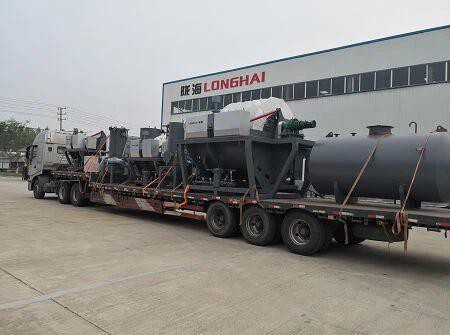
Lianyungang Longhai Mining Machinery Manufacturing Co., Ltd. began in 1996, formerly known as Lianyungang Longhai mining machinery manufacturing factory. Since 2006, it has introduced foreign capital and changed its name to Lianyungang Longhai Mining Machinery Manufacturing Co., Ltd. (hereinafter referred to as "Longhai mining machinery"). First engaged in the production and sales of small beneficiation equipment such as magnetic separators. Vacuum filters have been produced since 1999. Cylindrical vacuum filter, disc vacuum filter (plastic plate, filter cloth and filter medium). Since 2005, we have seen that many fine-grained concentrates and tailings in the mine beneficiation industry need to be dehydrated, the aperture of the filter cloth of the disc filter is too large, and the filtered fine-grained ore is easy to stick to the surface of the filter cloth or penetrate. In addition, the filtrate is too turbid and does not meet the discharge standard, so we began to produce a ceramic vacuum filter with a higher degree of automation. The filtrate is clear, the filterable material particles can reach 325 mesh, the water content is lower, and the degree of automation is higher, Lower power consumption.
FAQ
As one of the most professional bidirectional ceramic filter manufacturers and suppliers in China, we're featured by quality products and competitive price. If you're going to buy cheap bidirectional ceramic filter made in China, welcome to get quotation from our factory.