
Ceramic Filter
Why Choose Us
High Quality
Our products are manufactured or executed to very high standards, using the finest materials and manufacturing processes.
24H Online Service
We try and respond to all concerns within 24 hours and our teams are always at your disposal in case of any emergencies.
Professional Team
Our professional team collaborate and communicate effectively with one another, and are committed to delivering high-quality results. They are capable of handling complex challenges and projects that require their specialized expertise and experience.
Rich Experience
Dedicated to strict quality control and attentive customer service, our experienced staff is always available to discuss your requirements and ensure complete customer satisfaction.
What is Ceramic Filter
A ceramic filter uses tiny pores on a ceramic surface to filter bacteria and sediment out of drinking water. It is an affordable and versatile water filtration method that can be installed in households or used as a portable filtration device.
A ceramic filtration system uses a natural ceramic media as the heart of a water filtration process. The ceramic filter cartridge, often referred to as a ceramic filter candle, processes the water and removes contaminants through a network of pores. Ceramic filtration systems exist in a variety of applications. They can be gravity-fed, under-sink, countertop, or in some instances, used for a whole house or even light industrial processes.
-
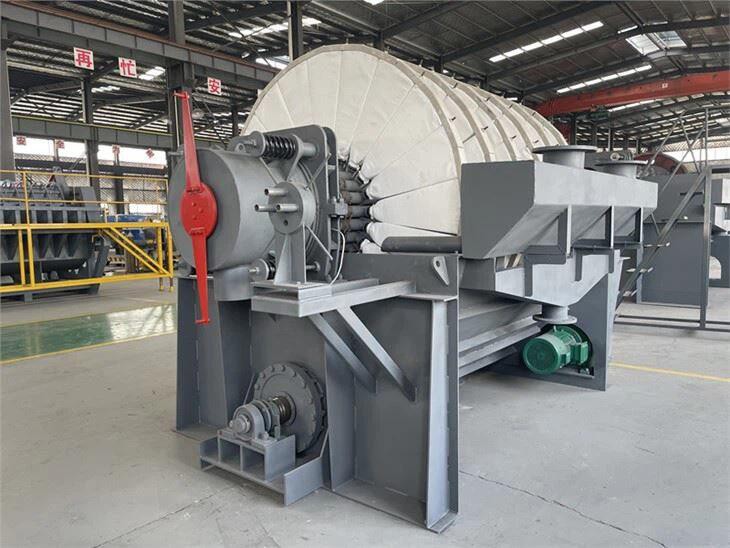
![240㎡ Filter Area No Noise Ceramic Filter]()
240㎡ Filter Area No Noise Ceramic Filter
-
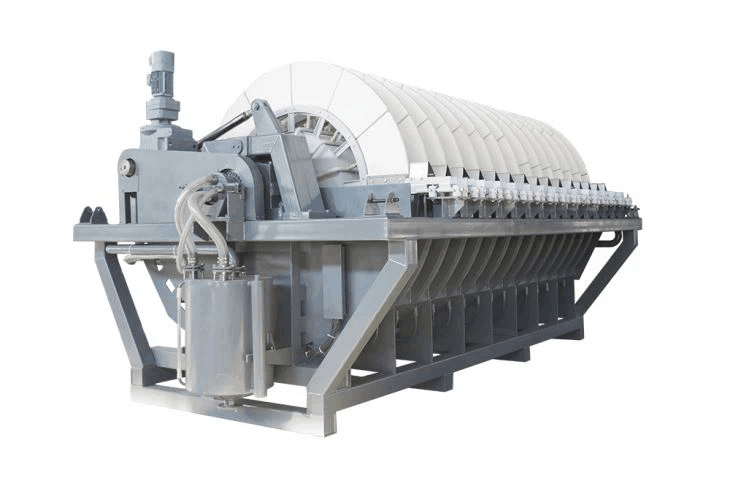
![Energy-saving Unbidirectional Ceramic Filter]()
Energy-saving Unbidirectional Ceramic Filter
-
![Auto-Control Bidirectional Distribution Valve Pump Ceramic Filter]()
Auto-Control Bidirectional Distribution Valve Pump Ceramic Filter
-
![High Efficiency Unbidirectional Ceramic Filter]()
High Efficiency Unbidirectional Ceramic Filter
-
![3㎡ Environmental Ceramic Filter]()
3㎡ Environmental Ceramic Filter
-
![5㎡ Unbidirectional Distribution Valve Pump Ceramic Filter]()
5㎡ Unbidirectional Distribution Valve Pump Ceramic Filter
-
![2㎡ Filter Area Automatic Ceramic Filter]()
2㎡ Filter Area Automatic Ceramic Filter


Friendly to environment – Unlike membranes that use artificial material, it is made from naturally occurring raw materials, which are easy to dispose of in an environmentally friendly manner. It is highly biodegradable and helps to keep the Earth clean and free of growing landfills.
Prevent bacteria recontamination – The silver incorporated in the ceramic releases small quantities of positively charged ions to destroy microorganisms, inhibit enzyme growth, kill bacteria and prevent recontamination. It guards the filter against bacteria growth whenever there is a chance that the water trapped in the outlet tap is re-contaminated.
Durable and value for money
Unlike other filters that need replacement every year, Ceramic Filter is cleanable and reusable for up to 5 years or 50’000 liters.
Retain essential minerals
Its pore size is small enough to remove all bacteria & protozoa that may be found in tap water, but yet large enough to allow the essential minerals that are beneficial to our bodies to pass through.
Natural Tasting Water
Unlike membranes that strip the water of minerals that give water that natural taste, ceramic treated water retains that sweet natural taste that people love.
How Does a Ceramic Filter Work?
Ceramic water filters work by allowing water to flow through the millions of tiny pores on the casing of the ceramic cartridge. These pores, one-half micron in size, trap impurities as the water passes through them. The inside of the filter is a convoluted maze of sharp angles designed to catch any particles that have penetrated the exterior surface. Because of the minute size of the pores and complexity of the filter, the water percolation through a ceramic filter is very fine particulate filtration, eliminating a host of contaminants like bacteria and sediment.
This system of filtration imitates part of the Earth’s natural water purification process. Just as water from aquifers seeps through layers of rock in the earth’s surface as it makes its way to streams, the water in a ceramic filter permeates natural media to rid itself of impurities.
Ceramic Filter Life And Cleaning
The normal brushing times of the ceramic filter element are 20-28 times. The ceramic filter element is evenly coated with silver ions and antibacterial active ingredients. It has antibacterial and antiseptic effects. It can effectively remove bacteria, fine particles, impurities and viruses in the water. Purification of water and mineral water, sterilization and preparation of sterile water, disinfection water, high-purity water in the pharmaceutical and electronic industries, chemical industry and other wading industries. Generally, it can be used for 10-12 months, and a good ceramic filter can be used for 3-5 years, or even longer.
The ceramic filter element can be cleaned repeatedly and easily replaced. With the water outlet of the core facing up, scrub the surface of the filter element with sandpaper (or scouring pad) under running tap water, wipe off the contaminants on the surface of the filter element to expose a new surface, and rinse it.
Because the ceramic filter element is made of pure natural physical materials, it will not cause secondary pollution during the use of the water purifier. At the same time, it does not remove all the minerals in the water like the pure water machine, it will retain the beneficial minerals in the water. Substances, while effectively removing mud, bacteria, rust, never clogging, long service life, excellent filtration effect, sweet water purification and so on. And the real ceramic filter also has a strong advantage that it is not afraid of clogging, can adapt to the very poor water quality, and is a versatile player. Some low-quality membrane filtration filter elements can work better under better water quality conditions, but when the water quality is poor, they will be gradually blocked by muddy sand rust in the water, bacterial suspension, etc., and then lose the filtering effect.
Ceramic filters can be used in under-sink installations, other point-of-use applications, or as portable filters you can take on camping trips or elsewhere. The most common application for ceramic water filters is point-of-use drinking water. Because of its 0.5 micron filtration, simple upkeep, and low cost, a ceramic filter makes an excellent countertop or under-sink filter in households. The gravity-fed filters can provide you with clean water in your kitchen and be taken on hiking and camping trips. If installed with the proper cartridge, you can pour stream water into the filter and make it drinkable. Ceramic filters are also ideal for anywhere where space is limited, like an apartment or RV. A double open-ended ceramic filter can be inserted into any standard 10-inch water filter housing and used in conjunction with other filters, like a sediment filter or anti-scale filter.
Ceramic alone is a powerful filter and handily removes many contaminants. The extent of the filtration varies and will depend on what additional filtration media the ceramic candle contains. The main categories of contaminants that basic ceramic filters remove are bacteria, sediment, and turbidity.
• Bacteria: Ceramic filters are quite effective at removing bacteria from water. Few bacteria are smaller than one micron in size. Unable to pass through the pores, the bacteria are filtered out as the water seeps through the ceramic filter. Ceramic filters rid water of about 99% of pathogenic bacteria, including E. coli, shigella, and salmonella. Microbial cysts, such as Giardia and Cryptosporidium, are also too large to pass through the filters and are easily removed by the ceramic shell. The silver ion impregnation makes ceramic filtration especially advantageous to those with microbiologically unsafe drinking water. Silver ions are toxic to bacteria, further nullifying bacterial contaminants and preserving the cleanliness of the filter’s surface.
• Sediment: Particulate matter like dirt, debris, and rust is effectively filtered out by the ceramic filter’s porous surface.
• Turbidity: Turbidity is cloudiness caused by suspended particles in the water. This turns your water unappetizing shades of yellow and brown. Ceramic filters adeptly remove the murky coloration from water and restore its clarity.
• Chlorine (if filter contains activated carbon): Chlorine is present in most city water because it is used in the municipal purification process. Chlorine leaves water with a bitter chemically taste and an unpleasant smell. The activated carbon reduces both chlorine and chloramines in water, restoring your water’s fresh flavor.
• VOCs (if filter contains activated carbon): Volatile organic compounds, or VOCs, include a wide array of chemical contaminants that make their way into water by way of everything from agricultural runoff to consumer products like paints and pesticides. These compounds are all carbon-based, and ceramic filters with carbon cores will greatly reduce the levels of VOCs in your water.
• Heavy Metals (if filter contains ion exchange resin): If the ceramic element contains an ion exchange resin, heavy metals like lead, mercury, copper, and zinc are greatly reduced in the water.
How to Clean a Ceramic Filter
One of the benefits of a ceramic filter is that it can be cleaned and reused many times. As water is filtered through the ceramic, the filtered contaminants build up on the exterior of the ceramic candle, clogging the porous surface, and causing the water flow to slow down or stop entirely. When you notice this happening, clean the ceramic filter by following the below steps:
● Carefully remove the ceramic candle from the unit’s housing. Handle the candle gently, as ceramic is a fragile material and can crack if dropped.
● Scrub the filter under running water or in a bowl of water with a clean plastic brush, toothbrush, or soft scouring pad. Avoid soaps, detergents, and rough materials like steel wool.These will render your filter unusable. Brush away from the threaded mount to avoid contamination. You may consider covering the mount with plastic to protect it.
● After checking to ensure the sealing’s washer is properly seated, re-install the filter.
Ceramic Filter The Manufacturing Process
Selecting the sponge
First, a polymeric sponge must be selected with suitable properties. The pore size of the sponge determines the pore size of the final ceramic after firing. It must also be able to recover its original shape and convert into a gas at a temperature below that required to fire the ceramic. Polymers that can satisfy these requirements include polyurethane, cellulose, polyvinyl chloride, polystyrene, and latex. Typical polymeric sponges range in size from 3.94-39.4 in (10-100 cm) in width and 0.394-3.94 in (1-10 cm) in thickness.
Preparing the slurry
After the sponge is selected, the slurry is made by mixing the ceramic powder and additives in water. The ceramic powder usually consists of particles less than 45 microns in size. The amount of water can range from 10-40% of the total slurry weight.
Immersing the sponge
Before immersion, the sponge is usually compressed to remove air, sometimes using a mechanical plunger several times. Once it is immersed in the slurry, the sponge is allowed to expand and the slurry fills the open cells. The compression/expansion step may be repeated to achieve the desired density.
Removing excess slurry
After infiltration, between 25-75% of the slurry must be removed from the sponge. This is done by compressing the sponge between wooden boards, centrifuging, or passing through preset rollers. The gap between rollers determines the amount removed. Sometimes the impregnated foam goes through another shaping step since it is still flexible.
Drying
The infiltrated sponge is then dried using one of several methods—air drying, oven drying, or microwave heating. Air drying takes from eight to 24 hours. Oven drying takes place between 212-1,292° F (100-700° C) and is completed in 15 minutes to six hours.
Burning out the sponge
Another heating step is required to drive off the organics from the slurry and burn out the sponge. This takes place in air or inert atmosphere between 662-1,472° F (350-800° C) for 15 minutes to six hours at a slow and controlled heating rate to avoid blowing apart the ceramic structure. The temperature depends on the temperature at which the sponge material decomposes.
Firing the ceramic
The ceramic structure must be heated to temperatures between 1,832-3,092° F (1,000-1,700° C) to densify the material at a controlled rate to avoid damage. The firing cycle depends on the specific ceramic composition and the desired final properties. For instance, an aluminum oxide material may require firing at 2,462° F (1,350° C) for five hours.
Types of Ceramic Filters
Ceramic Foam Filters
Foam ceramic filters with 75% to 90% open volume are usually classified by the number of pores per inch on the line (ppi). For example, a 10 ppi foam ceramic filter has a pore size of 1778 μm, with a range of 584 to 3708 μm; a 30 ppi foam ceramic filter has a pore size of 711 μm, with a range of 229 to 1422 μm. The thickness of the foam ceramic filters is typically 25 mm. The structure is designed according to the specific use conditions. The ceramic foam filters have been made of NCL-Mullite, ZrO2, Zr-SiO4 and Al2O3. Al2O3 foam ceramic is used, which is not fragile during operation, has good resistance to thermal vibration and chipping, and has good resistance to creep deformation under the flow of high-temperature metal liquid at 1700℃. Because of the high porosity of the open holes (75% to 90%) and the thin pore wall, the foam ceramic filter does not need to be preheated before contacting with the metal liquid.
Granular Ceramic Filter
The structure of the particle ceramic filter is a support plate with holes at the top and bottom, with a particle filler in the middle, and a layer of active adsorption material plated on the particles, see Fig. 3. The thickness of the support plate is generally 12 mm, and the diameter of the holes is 4.5 to 13 mm.
MgO or Al2O3 is used as the filler for the granular ceramic filter, and the active adsorbent is selected according to the class of inclusions to be filtered. For high-temperature alloys treated with rare-earth metals, rare-earth metals are selected as the activator, and the problem of waterproofing is to be solved when calcium oxide particles are used.
Our factory
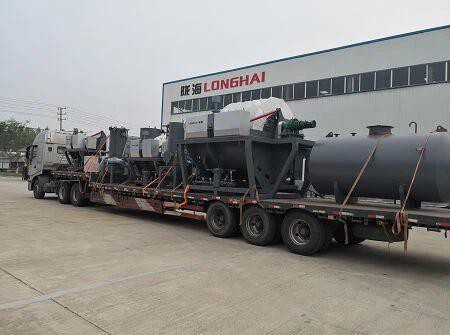
Lianyungang Longhai Mining Machinery Manufacturing Co., Ltd. began in 1996, formerly known as Lianyungang Longhai mining machinery manufacturing factory. Since 2006, it has introduced foreign capital and changed its name to Lianyungang Longhai Mining Machinery Manufacturing Co., Ltd. (hereinafter referred to as "Longhai mining machinery"). First engaged in the production and sales of small beneficiation equipment such as magnetic separators. Vacuum filters have been produced since 1999. Cylindrical vacuum filter, disc vacuum filter (plastic plate, filter cloth and filter medium). Since 2005, we have seen that many fine-grained concentrates and tailings in the mine beneficiation industry need to be dehydrated, the aperture of the filter cloth of the disc filter is too large, and the filtered fine-grained ore is easy to stick to the surface of the filter cloth or penetrate. In addition, the filtrate is too turbid and does not meet the discharge standard, so we began to produce a ceramic vacuum filter with a higher degree of automation. The filtrate is clear, the filterable material particles can reach 325 mesh, the water content is lower, and the degree of automation is higher, Lower power consumption.
FAQ
As one of the most professional ceramic filter manufacturers and suppliers in China, we're featured by quality products and competitive price. If you're going to buy cheap ceramic filter made in China, welcome to get quotation from our factory.