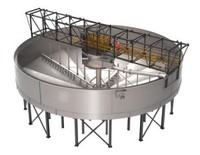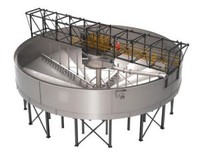


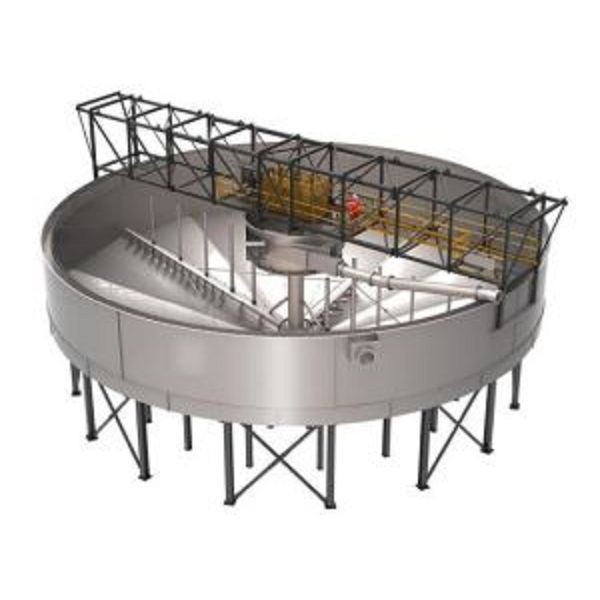
15m High Efficiency Thickener
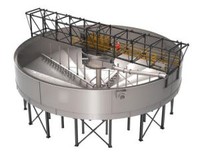
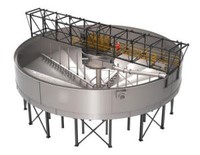
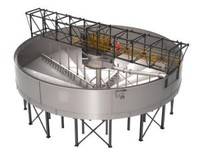
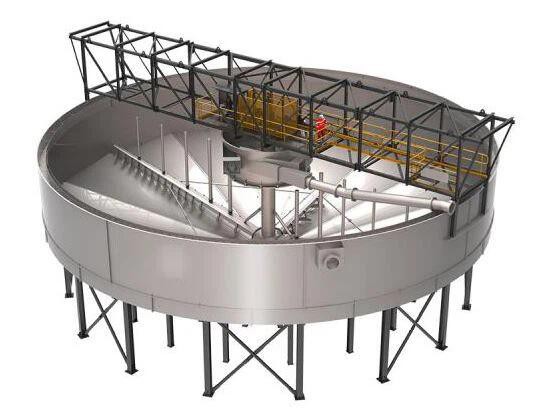
High efficiency thickener is mainly used for solid-liquid separation processes such as liquid concentration and wastewater treatment. The increased height-to-diameter ratio of the high-efficiency thickener allows the fine-grained pulp to stay longer in the machine.
Why Choose Us
High Quality
Our products are manufactured or executed to very high standards, using the finest materials and manufacturing processes.
24H Online Service
We try and respond to all concerns within 24 hours and our teams are always at your disposal in case of any emergencies.
Professional Team
Our professional team collaborate and communicate effectively with one another, and are committed to delivering high-quality results. They are capable of handling complex challenges and projects that require their specialized expertise and experience.
Rich Experience
Dedicated to strict quality control and attentive customer service, our experienced staff is always available to discuss your requirements and ensure complete customer satisfaction.
What is 15m High Efficiency Thickener
High efficiency thickener is mainly used for solid-liquid separation processes such as liquid concentration and wastewater treatment. The increased height-to-diameter ratio of the high-efficiency thickener allows the fine-grained pulp to stay longer in the machine.
Related Product
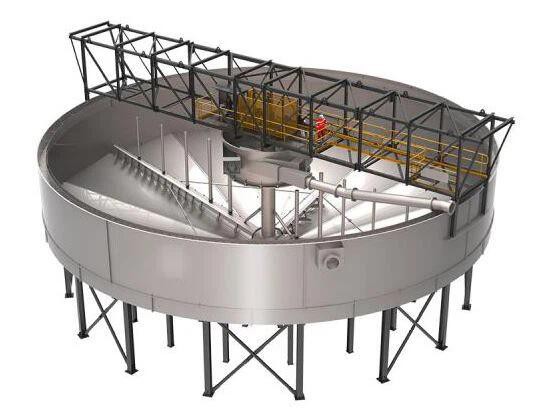
Thickener is a concentrating system for increasing the concentration of materials, which is mainly divided into two parts: the tank body of the Thickener and the drive of the Thickener.
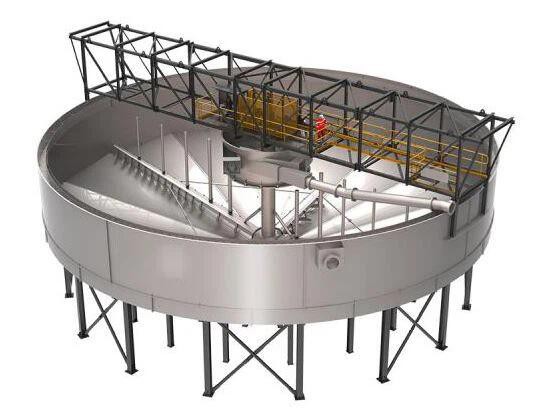
High-efficiency thickener is a thickening equipment with high concentration efficiency, large processing capacity, and high degree of automation in rake thickeners. Compared with conventional thickeners, this thickener has huge advantages.
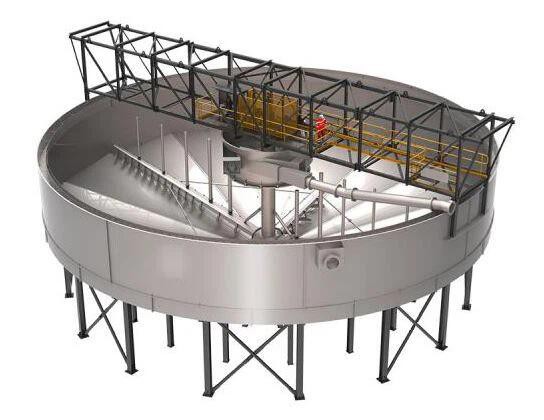
30m Thickener with Drive System
Thickener is a new High-rate thickener with central-drive, automatic lifting rake that we have developed based on foreign technology. It is widely applicable to treatment of various industrial feed pulp, like coals, metal ore dressing water, metallurgy, chemical, tailings treatment, environmental protection etc.
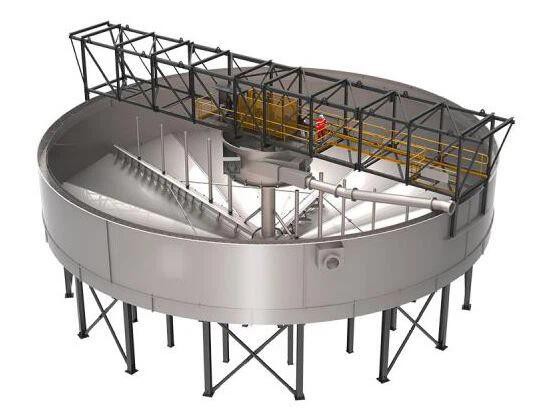
The high efficiency concentrator produced by our company is suitable for removing the water in the ore concentrate and the tailings in the ore beneficiation plant and it can concentrate the ore pulp from 20-30% to about 40-70%.
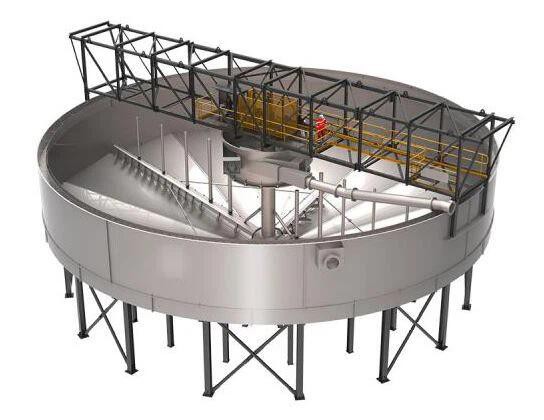
High Efficiency thickener is situable for dehydrating water of the beneficiated ore and tailings in the concentrating mill, and widely used in metallurgy, chemical engineering, nonmetal beneficiation and environmental protection and so on.
Advantages of 15m High Efficiency Thickener
Add the feed pipe under the liquid level
For the conventional ordinary thickener, the slurry to be concentrated is usually pumped into the thickener,which is easy to generate negative pressure in the clarification zone and lead to air mixing, which is not conducive to the full sedimentation of the slurry.The inlet of the feed pipe of efficient improved thickener will be set below the overflow surface of the thickener, and the single or double pipe will enter the central mixing cylinder of the thickener to avoid the mixing of secondaryair.
Move the feeding cylinder down
The conventional thickener feeding barrel is usually located at the junction of settling zone and settling zone, which is easy to muddy the materials in settling zone again. Efficient improved thickener moved the feeding cylinder down, and there are a plate to keep the material. It makes the feed pulp fall down more evenly and slowly, so as to effectively prevent the flow age phenomenon caused by the ore pressure, and the settlement effect is better.
Add the deaerating tank
After the bubble in the pulp enters the concentrator, it will destroy the interface between the pulp and the clean water layer, which is not conducive to the sedimentation of particles, so it should be removed in advance. Efficient improved thickener can deploy ordinary deaerating tank, high-efficiency deaerating tank and defoaming cylinder. The purpose is to eliminate the bubbles in the pulp and let the solid particles settle quickly.
Add Zigzag overflow weir
Add the zigzag overflow weir is mainly to resolve the negative pressure difference in the thickener. The large pressure difference is changed into countless small pressure difference,which can improve the suction phenomenon of local drainage caused by uneven overflow weir.
Add inner over weir
Add the inner overflow weir for thickener, so that the material can flow through the regulation routine. By increasing particle stroke and preventing "short circuit", the settlement area is greatly increased and the clarification area is not affected.
The shape of rake from line type to curve type
Change the shape of rake from line type to curve type. In this way, the pulp is not only harrow to the center, but also gives the force of the extruded center, which makes the bottom flow concentration higher, which increases the processing ability of the thick-driven machine.
Working Principle of 15m High-Efficiency Concentrator
Thickener is mainly used to treat slime and waste water, and it is widely used in mining, metallurgy, coal, chemical industry, building materials and environmental protection. It not only improves the utilization rate of backwater and underflow density, but also plays an important role in environmental protection. This high-efficient thickener developed by Xinhai is not just a sedimentation equipment, but also a new type of dewatering equipment. Here is the principle of high-efficient thickener.
The slurry needs to remove most of the gas by the air-removing device before sent to the thickener, and then fully mix with the flocculant in the mixing arrangement. The flocculated slurry diffuses enters into the high concentration of sediment in a diffusion pattern. Slurry water can rise through the settled sludge layer and eventually discharge from the overflow. And the settled sludge layer prevents the solid particles from rising, which plays the biggest role in filtration. The unflocculated slurry can continue to contact with the flocculation in the settled sludge layer, so the flocculation keeps growing. Finally, the slime at the bottom of thickener is discharged from the discharge port under the action of the central-driven rake.
15m High Efficiency Thickener Failure Classification
According to the quality monitoring method, the factors that cause thickener failure can be divided into three categories, namely, accidental factors, system factors and mechanical design factors.
Accidental factors: Mainly refers to the subtle differences in equipment materials, normal grinding and corrosion of equipment, etc. These factors are difficult to identify and eliminate, and will not cause serious harm to the normal use and production of equipment.
Systematic factors: Mainly refers to the equipment spare parts specifications, incorrect varieties, mechanical transmission device damage, not according to the program operation, limit switch failure, pressure sensor failure and so on. Failures caused by these factors are relatively obvious and easy to recognize, and these factors will seriously affect the service life and productivity of the thickener. For these factors, it is necessary to strengthen daily management, monitoring and reasonable operation.
Mechanical design factors: The rationality and optimization of the mechanical design of the equipment is mainly determined by the manufacturer. Choosing the right manufacturer is one of the ways to avoid design defects.
According to different fault conditions, corresponding measures need to be taken to eliminate the impact caused by the fault. Here are several troubleshooting methods for you.
Strengthen lubrication management: lubrication is the main way to maintain the equipment. Equipment lubrication specification requires manual management, and is not the main problem causing equipment failure. Therefore, improving the awareness of equipment management can reduce the probability of equipment failure.
Timely maintenance and replacement of spare parts: Normal wear and tear of bearings and parts indicates that the service life of the parts has come to an end and must be replaced. In addition, the procurement and warehousing of spare parts should be strictly controlled to avoid equipment failure due to unqualified spare parts.
Timely detection of problems and solutions: For example, the pressure sensor on the concentrator is an electrical device. It can only be found when there is a failure, and it is easier to solve it later.
Prevent overload operation: When the thickener bottom flow flow is large, it is easy to overload operation. When there is a problem with the quality of the bottom-flow pump or the operator is not very responsible, it is easy to cause a large amount of slag in the thickener. When the thickener bottom flow pump is working, once it is found that the liquid supply is bad and the flow rate is insufficient, the impeller needs to be replaced in time. If leakage occurs, the seals should be replaced in time, and additional backup pumps should be installed to prevent overloading. The main reason for overload operation is that the bottom flow in the thickener cannot be discharged in time. Therefore, it is necessary to check the data signal from the pressure sensor to the monitor in time, and judge whether to discharge the underflow according to the data.
Prevent shaft and rake frame deformation: There are two main factors that cause shaft and rake frame deformation: overload operation makes the main shaft torque or even fracture, or shorten the service life. Over time, there is corrosion and wear. When the bottom flow of the thickener is discharged in time, the damage of the mixing device can be avoided.
Prevent turbine worm gear wear: The turbine rotates slowly, and ideally, if lubrication is sufficient, zero wear can be realized. However, there are some external factors, and the wear of the worm gear should not be ignored. When overloaded, the worm displacement is large, resulting in increased force between the turbine and worm, resulting in wear. Lubricating oil or impurities in the oil chamber can cause friction, wear and corrosion. Therefore, it is necessary to regularly monitor and check the operation of the worm gear to avoid equipment failure caused by human factors.
6 Reasons for Abnormal Vibration of 15m High Efficiency Thickener
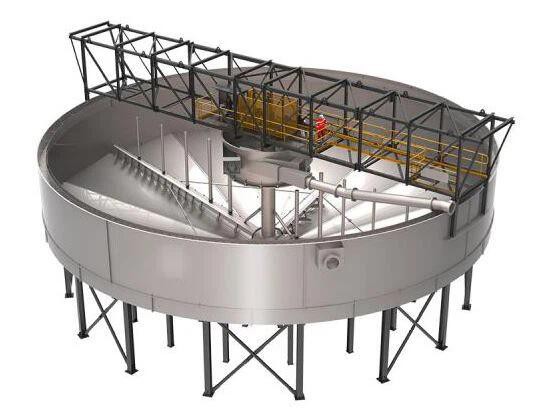
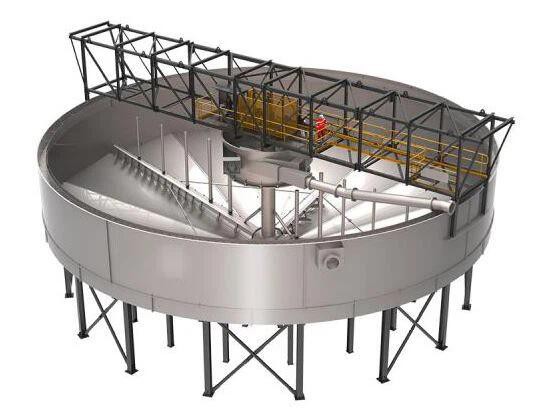
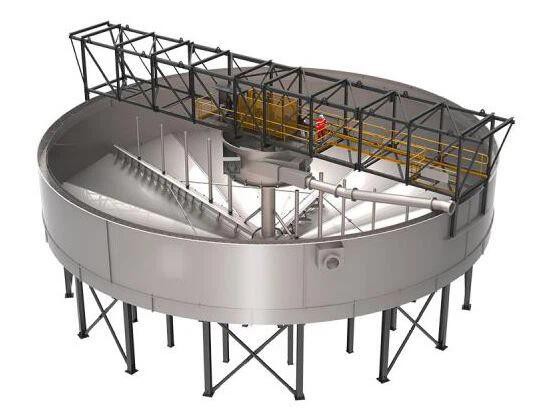
As an important equipment for concentrate and tailings dewatering in the ore dressing process, the vibration of the thickener is abnormal, which directly affects the daily production of the ore dressing plant.
There are 6 causes of abnormal vibration. The center column deviation of the dense machine, transmission level, unequal rake gear bars, unsynchronized transmission mechanism, damaged transmission gears or bearings. When abnormal vibration occurs, we can check the thickener from these six aspects. Only when we find the root cause of the problem can we work out a suitable solution.
Reason 1: Deviation in verticality of the center column of the thickener
Deviation in the verticality of the center column of the thickener directly causes the thickener rake to be unable to run horizontally and evenly. After the center column is tilted, the long rake will be at a low point. Thereafter, every time it rotates to this point, the long rake on the other side will always be at the high point. This will tilt the rake as a whole. Being in a high and low state during rotation tends to produce abnormal noise and vibration in the thickener. In addition, this verticality deviation will also cause uneven force on the drive gears of the thickener, which is prone to produce abnormal noise in long-term operation under such conditions. There may also be a problem of damage to the drive gear.
Reason 2: Deviation in the level of the thickener transmission device
During the installation of the thickener, there is the problem of deviation in the level of the drive device. Since the rotating mechanism of the thickener is connected to the drive, it directly causes the rotating mechanism to deflect during operation, which leads to abnormal vibration of the thickener. Over time, the abnormal rotation caused by the drive deflection may cause permanent damage to its internal drive components.
Inspection Methods and Solutions
Use the main support structure of the drive or the upper plane of the thickener's large gear as the inspection site. Then, find a measurement plane and take 4 points in different directions as the measurement reference. Detect the static 4 points by the level meter, and then collect the dynamic detection values of the 4 points during the operation of the thickener. Compare these values to determine whether there is any horizontal deviation in the thickener drive unit.
The problem of abnormal vibration was solved by adjusting the angle of the thickener driving device and the connecting part of the center column to eliminate the horizontal deviation.
Cause 3: Thickener rakes not on the same level
The thickener usually has two long rakes and two short rakes. In the thickening process, the rakes are constantly rotating. Due to the different concentration of the slurry, the force on the rake frame during the process is different. In addition, due to the long cantilever, long-term operation can easily cause the four rake frames of the thickener not to be on the same level. If the thickener is operated under this faulty condition, the rakes will float up and down due to uneven force during rotation, resulting in abnormal vibration of the thickener. It will also affect the uniform settling of the slurry and the reduction of the overflow water quality.
Inspection methods and solutions
Empty the thickener. Determine 4 measuring points on the side wall of the thickener tank according to different orientations. Judge whether all the rake arms are running on the same level and what is the deviation by means of the latitude and longitude meter and the rake arm position corresponding to each point.
Adjust the connection position of the rake arms in question in time according to the test results. When the rake is always at the same level, you can troubleshoot.
Reason 4: Drive mechanism is not synchronized
There are 2-4 drive heads on the thickener that can make the machine rotate. Each drive head works independently to power the rotation of the thickener. When the drive heads are running in an abnormal state, it will lead to insufficient driving force of the equipment, or the drive is obstructed, or the driving gears of the drive heads are dragged by the force, which will cause the vibration of the thickener.
Inspection method and solution
Remove the thickener drive unit and perform a mechanical and electrical inspection of multiple drive heads to determine if the equipment drives are working in sync. Then repair and correct the defective drive heads to resolve the out-of-sync problem.
Cause 5: Damaged thickener drive gears or bearings
Concentrators can operate for long periods of time without regular maintenance and lubrication. The gears and bearings of the unit may be damaged due to uneven stress. Faulty parts produce noticeable vibration and abnormal noise during operation. If not dealt with in time, malfunctions such as abnormal stoppage of the equipment and non-operation of the rake may occur.
Inspection methods and solutions
Directly repair the abnormal noise parts and eliminate the fault.
Reason 6: Insufficient structural strength of the thickener rake and rotary cage
The rake frame and rotating cage bear a large force when the thickener is running, and the larger the thickener is, the longer the rake frame is, and the larger the force on the rake arm is. Insufficiently strong rakes and drums will deform elastically when running in the slurry layer, causing the drums to deviate to one side. This can cause the entire unit to wobble.
Inspection methods and solutions Maintain the equipment regularly. If the rake frame and rotating cage are deformed, they can be reinforced with appropriate additional support, strengthened connection strength and other reinforcement treatments.
The above are the six major causes of abnormal vibration of the thickener and the simple diagnosis and solution. Xinhai suggests that when purchasing a thickener for ore processing, factors such as production environment, process conditions and investment cost should be considered comprehensively. Then, you should choose a professional and qualified manufacturer in order to extend the service life of the equipment and avoid economic losses.
Our factory
Lianyungang Longhai Mining Machinery Manufacturing Co., Ltd. began in 1996, formerly known as Lianyungang Longhai mining machinery manufacturing factory. Since 2006, it has introduced foreign capital and changed its name to Lianyungang Longhai Mining Machinery Manufacturing Co., Ltd. (hereinafter referred to as "Longhai mining machinery"). First engaged in the production and sales of small beneficiation equipment such as magnetic separators. Vacuum filters have been produced since 1999. Cylindrical vacuum filter, disc vacuum filter (plastic plate, filter cloth and filter medium). Since 2005, we have seen that many fine-grained concentrates and tailings in the mine beneficiation industry need to be dehydrated, the aperture of the filter cloth of the disc filter is too large, and the filtered fine-grained ore is easy to stick to the surface of the filter cloth or penetrate. In addition, the filtrate is too turbid and does not meet the discharge standard, so we began to produce a ceramic vacuum filter with a higher degree of automation. The filtrate is clear, the filterable material particles can reach 325 mesh, the water content is lower, and the degree of automation is higher, Lower power consumption.
FAQ
Hot Tags: 15m high efficiency thickener, China, manufacturers, suppliers, factory, price, buy, cheap, quotation, made in China
Previous: No Information
Next: 12m Automatic Thickener